

Wheat Hats
Find Wheat hats for babies and children for mild days, changing weather and winter. Choose from lightweight cotton hats, warm knitted styles and earflap hats that fit well and blend easily into a calm everyday wardrobe.
This collection is empty
Wheat Hats
Wheat hats for babies and children all year round
Wheat hats for babies and children are best chosen based on season, fit and material. Some styles are ideal for warm days when your child needs light protection from sun and wind, while others are made for cold months with wind, frost and many hours outdoors. In this category, you will therefore find Wheat baby hats, lightweight summer styles and warm winter hats for older children.
For most parents, it really comes down to one simple question: which hat makes sense right now? On warm days, a lightweight cotton hat or a style with a brim is often a good choice. When the temperature drops, a knitted hat, an earflap hat or a warm lined style can make everyday life more comfortable for your child. If you are unsure how warm the hat should be, consider the weather, your child’s activity level and whether they are lying still in the pram or running around at the playground.
Wheat is known for calm colours, simple shapes and a look where function and design go hand in hand. This makes the hats easy to wear with the rest of the wardrobe and a natural choice if you want something that is practical, simple and understated.
Which Wheat hat suits the season?
The main difference between Wheat hats is whether they are made for summer, transitional weather or winter. It is worth keeping in mind, because a hat that feels just right in March can quickly become too warm in the middle of summer. And the other way around, a thin hat will rarely be enough when the weather turns truly cold.
As a simple guide, you can think of it like this:
- Summer hat: light and breathable, often made from cotton and sometimes with a brim or neck protection. Great for sunny and warm days.
- Transitional hat: a lightly warm style for cool mornings, wind and changing weather.
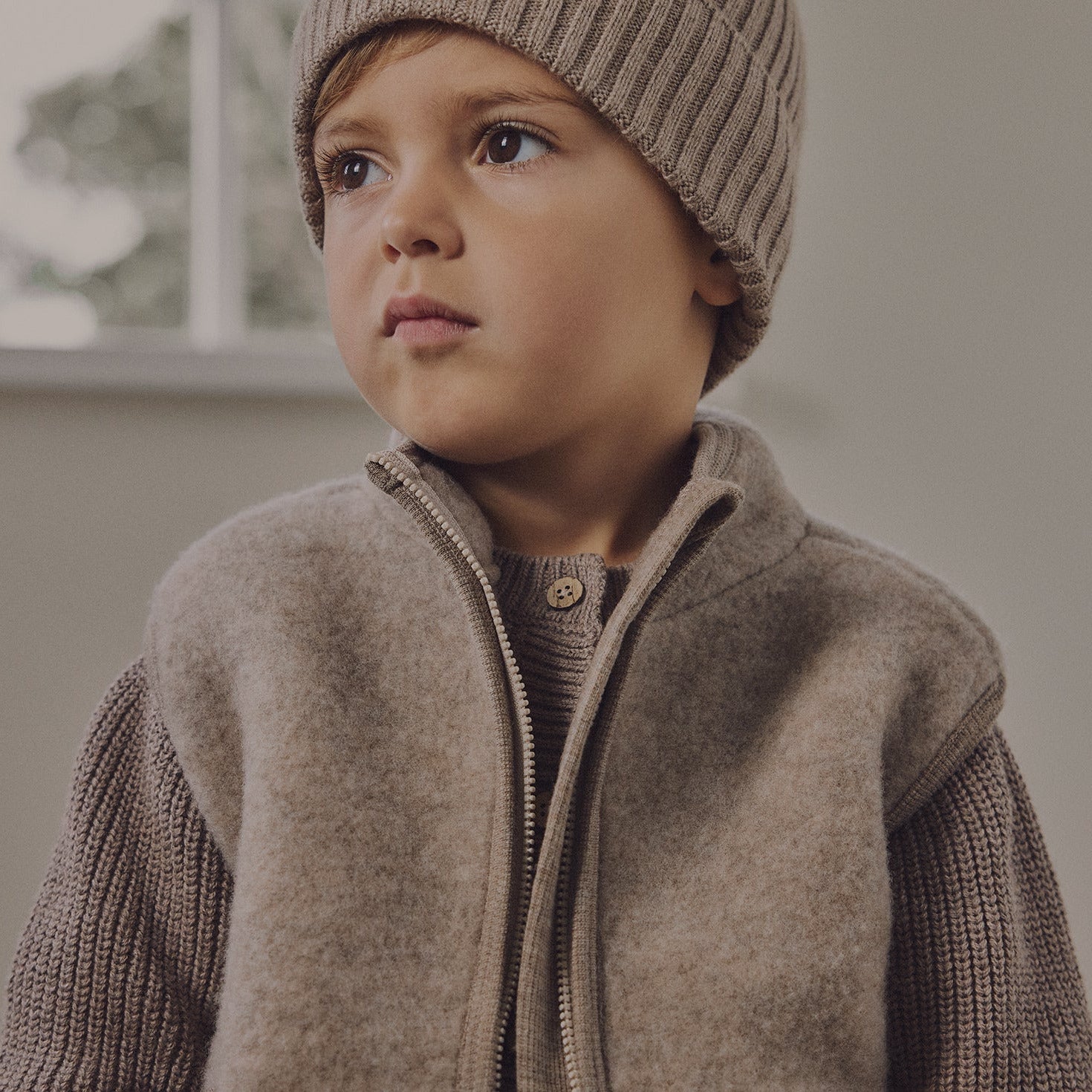
- Winter hat: a warmer construction in knit, wool or with lining to help retain heat.
- Earflap hat: a good choice when the ears and neck also need coverage, especially for younger children or windy days.
For summer, it can also be a good idea to look at sun hats or swim hats if the main need is shade and sun protection. During the colder months, a Wheat hat pairs well with outerwear such as Wheat winter jackets, so your child is well dressed from head to toe.
Materials in Wheat hats and what they mean day to day
The material has a big impact on how the hat feels when your child wears it. A Wheat children’s hat in cotton is often a really good choice in mild weather, because cotton is soft, light and comfortable against the skin. This makes cotton hats especially suitable for babies and young children, who can quickly get too warm in a heavier style.
A Wheat wool hat or a warmer winter style is better suited to cold days when more warmth is needed. Wool is particularly comfortable because it helps maintain an even temperature and still provides warmth even if the hat becomes slightly damp. This can be an advantage for children who run, climb and switch between high activity and short breaks outdoors.
Fleece or lining can be practical when your child spends a lot of time outside, or when the weather is cold, raw and damp. It is also a solution many parents appreciate for nursery, kindergarten and school days, where the hat needs to be easy to put on and durable enough for repeated use. On the other hand, this type of hat can quickly become too warm indoors, so it makes sense to choose based on how your child actually uses it throughout the day.
Many Wheat hats are made in simple materials and calm colours with a fit that works well for everyday wear. That makes them easy to add to the wardrobe without feeling like they were chosen for looks alone.
How to choose the right size and fit in Wheat hats
Fit matters a lot when choosing a Wheat hat. It should sit securely, but it should not feel tight. If it is too big, it can easily slip down over the eyes or fall off when your child moves. If it is too small, it quickly becomes uncomfortable to wear.
For babies, a style that sits close and comfortably around the head is often a good choice. For toddlers, ties, ear flaps or a more covering shape can help, especially if your child tends to pull the hat off. For older children, a classic Wheat beanie or knitted hat often makes sense because it is easy to take on and off independently in the cloakroom or on the way out the door.
The best starting point is your child’s head circumference rather than age alone. Age can be a useful guideline, but children grow differently. If you are between two sizes, choosing the larger one just to be safe is rarely the best solution. A hat needs to fit now if it is to stay in place and provide the warmth your child needs.
Wheat hats are easy to wear with the rest of the wardrobe
One of the things many people like about Wheat hats is the calm shades and simple expression. This makes them easy to match with the rest of your child’s clothes, both for everyday wear and across changing seasons. You do not need to rethink the whole wardrobe to make everything work together.
In the cooler months, the hat can be worn with a warm top and outerwear, for example a Wheat jacket or other outerwear in the same understated style. On milder days, a lightweight hat works well with soft basics and layers that can be taken on and off quickly as the weather changes during the day.
If you are looking for a warmer option with more coverage around the neck and nape, it may also be worth looking at Wheat balaclavas. They are often a good choice for the youngest children or for days when a regular hat is not quite enough.
Care tips to help the hat stay looking good for longer
Children’s hats get a lot of use, so washing and care matter too. A cotton hat is usually easy to handle in a busy everyday routine and often copes better with regular washing than a finer knitted wool style. Wool hats need a little more care and do best with gentle washing according to the care instructions, so they keep their shape and continue to feel soft.
It is worth looking at the material before you choose. If the hat is going to nursery, kindergarten or school and needs frequent washing, a more robust style is often the most practical option. If, on the other hand, you are looking for a warm and temperature-regulating hat for the cold months, wool is a really good choice for many families, as long as it is treated a little more carefully.
Wheat hats are a great choice if you want to find a hat that suits your child’s age, the weather and the everyday routine it will be used in. Explore the selection and find the style that suits your child best right now.